Monday, 13 April 2015

Thursday, 9 April 2015
Friday, 6 March 2015
Deadline day!
Today is the deadline for our film piece, and thankfully, my group and I, have finished! We have until 4pm today to get it finished, with still an hour lesson to go, and any time we need to put in ourselves. However, with that being said, we feel that we need to get someone to just have a final critical look on it again, just to point out any bits we may have missed ourselves. We have done this 3 times already with different people, but we feel we need a final look through to be sure.
Wednesday, 25 February 2015
Titling, Editing & Music!
Today we began playing around with the music for our film. With just over a week until our deadline, we felt that everything has been edited pretty much perfectly, and we just need to refine a few tiny details. With this being said, we opened up Mixcraft, and began having a play! After a very stressful ten minutes, our teacher saved us and showed us the basics, and my group and I soon got the hang of it! We put a couple of sounds together to try them out, in order to get the effect we want. We came up with a base idea of what sound we want to accomplish, and with a better understanding of the software, plan on finalizing our music next lesson!
Tuesday, 24 February 2015
Update: Filming and Editing!
With only a week and a half left to go until our deadline, it has been all hands on the past couple of weeks! The scenes we needed to re-film have been filmed, and the editing is done! Once we felt we had everything edited, we sat and watched our film opening, and picked out tiny details which need to be tweaked, removed or slightly changed, in order to gain the highest grade and get across to our audience the wanted effect. We picked out slight things such as, timings of music, or an ever so slightly shaky shot which needed to be cut in order to reduce/get rid of this issue. We will continue to be extremely picky and critical about our piece, until we feel it is perfect and our goal has been achieved.
We began adding titles to our piece, in order to gain an idea of which fonts and sizes etc, gives the effect we want.
Sunday, 25 January 2015
Filming - Thriller!
It may seem early, but my group and I began filming last Monday! We filmed 95% of our wanted footage we need, plus more! We filmed the same scene multiple times in order to choose which one looks best. We still have some scenes left to film, as when we looked back over our footage, we hadn't achieved the right shot or the effect we wanted wasn't clear. However, since we began filming quite a while before our deadline, it gives us the opportunity to re-film some scenes and have a play around with the editing, enabling us to get the exact shot and effect we want for our target audience.
Sunday, 11 January 2015
Target Audience.
After thoroughly researching why films are given age ratings, what the age ratings mean and what can be shown in a film with a certain age rating, my group and I decided to give our film the age rating of 15. We decided this was most appropriate, as within a film given the certificate age of 15, there can be large amounts of strong language. Violence may be strong, however it must not dwell on infliction of pain or injury. Strong gory images are not likely to be acceptable. However, strong threat and horror is allowed, as long as there's no sustained focus on sadistic or sexual threat.
Things which could be included in a 15 film are:
- strong violence.
- drug taking.
- frequent strong language.
- portrayals of sexual activity.
- strong verbal references to sex.
- sexual nudity.
- brief scenes of sexual violence or verbal references to sexual violence.
- discriminatory language or behaviour.
We feel that a 15 will be appropriate for our film, as the theme of out thriller is stalker, and is therefore a psychological thriller. We feel that there wont be any strong language or sexual violence within the film, however while the psychological side effects wont be massive, we feel that any age rating under 15 would be inappropriate, as the theme of the film may be unsuitable for a young audience. We also feel that if the age rating was any lower than 12, we would be restricted with the contents we could include, and therefore the film would lose the theme of a thriller, and therefore wouldn't create the effect we intend to create.
In some way or another, we would need to market our film, and therefore we have several ideas how we could do that. As our thriller is a 15, we feel that marketing our film through the internet and social media would be acceptable. We would initially try and attract our audience by advertising it on posters, or a trailer on youtube or TV. Also, by creating some sort of social media account to advertise our film would also be useful, as it's free and social media is a quick and easy way to get something known worldwide within minutes.
In some way or another, we would need to market our film, and therefore we have several ideas how we could do that. As our thriller is a 15, we feel that marketing our film through the internet and social media would be acceptable. We would initially try and attract our audience by advertising it on posters, or a trailer on youtube or TV. Also, by creating some sort of social media account to advertise our film would also be useful, as it's free and social media is a quick and easy way to get something known worldwide within minutes.
Saturday, 10 January 2015

Friday, 9 January 2015
Pitch.
As part of our research and planning, we had to make a one page pitch, and present it to our teachers. We set up two cameras, and filmed both our answers, and their questions. We then edited this in Premiere Pro, in order to help develop our editing skills ready for our final piece.
Thursday, 8 January 2015
Storyboard.
We have came up with a (pretty much) solid idea as to what we are going to have as our opening to our thriller. We intend to follow our storyboard as much as we can, however we are also allowing for any thing which may change if it doesn't look right or work when filming. We made a storyboard to make our ideas more final, and to make our lives much easier when it comes to filming, so we know what to do when. Even though our drawing may not be outstanding, we tried to add as much written detail as we could.


Pitch.
As part of our research and planning, we had to make a pitch to 'Welch and Spalding Films' in order to 'sell' our film. We made a plan of what we were going to include in our pitch, with things such as; the title of our film, and how we are going to make it different to everyone else's film.

Friday, 2 January 2015
Textual Analysis: Buried
Buried is a 2010 film directed by Rodrigo Cortés.

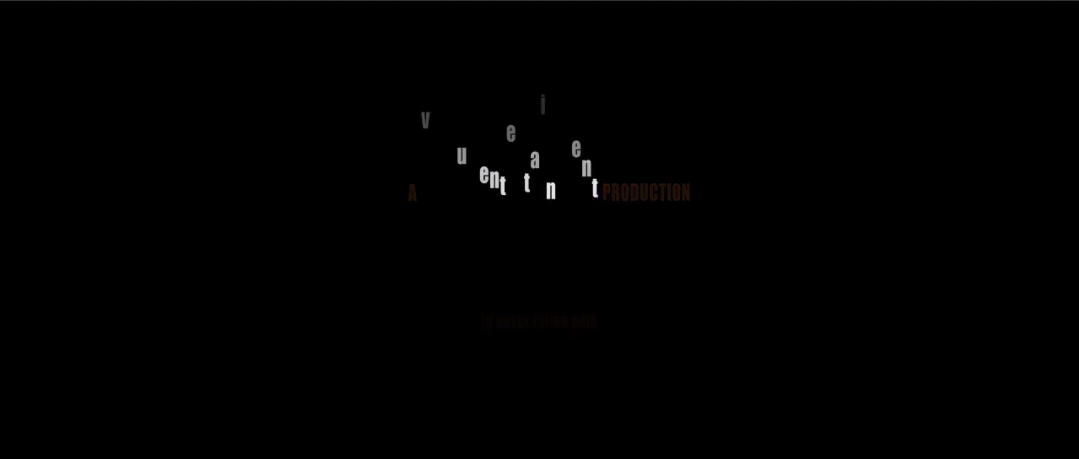 The beginning of the titling sequence begins as a black screen, with letters in small, bold white and auburn font fading in. This then continues into spelling the name of the production company. This stays in the beginning of the screen for a couple of seconds, showing the importance of the production company. The letters then begin floating up towards the top of the screen before disappearing, creating the feeling for the audience that they are moving down through the ground, progressively getting deeper and deeper. As this is happening, the next title comes up from the bottom of the screen in the same dirty-auburn colour.

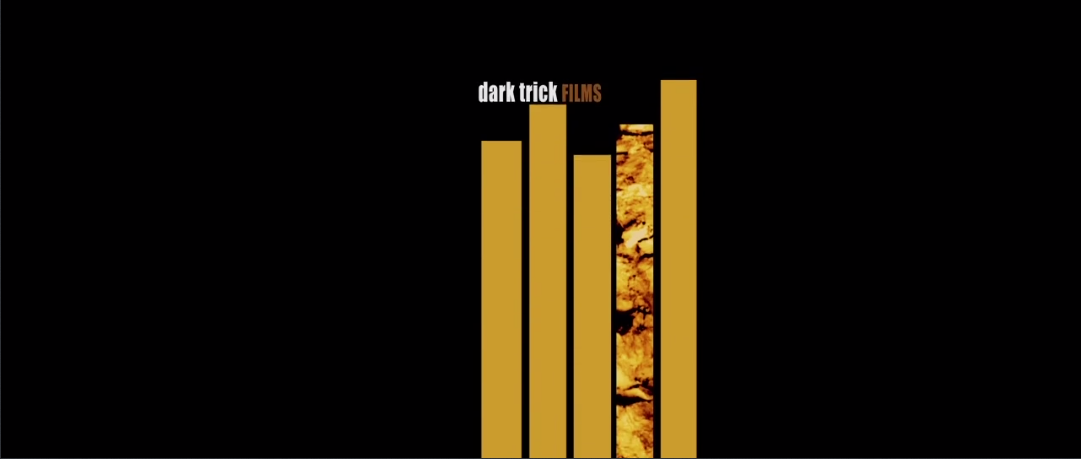
This continues like this for the next couple of titles, until 5 chunky strips come up from the bottom of the screen, pushing the last title out of the way. Four of these lines are in a camel/auburn colour, whilst the other one looks as if it is inside a cave underground. This continues whilst the names of the main cast are shown, with the strips being different widths and frequency. However, the same colour theme stays throughout, with the recurring strips of a photograph of underground. This suggests that the film is going to involve a cave underground, perhaps someone being trapped.
 These strips of colour continue to movie up the screen, whilst the background changes from black to what looks as if an image of dried mud. The overall background theme stays really dark, however the strips of colour fade into the title 'buried', which appears in bold capital letters, made from the images from inside the cave.
The beginning of the titling sequence begins as a black screen, with letters in small, bold white and auburn font fading in. This then continues into spelling the name of the production company. This stays in the beginning of the screen for a couple of seconds, showing the importance of the production company. The letters then begin floating up towards the top of the screen before disappearing, creating the feeling for the audience that they are moving down through the ground, progressively getting deeper and deeper. As this is happening, the next title comes up from the bottom of the screen in the same dirty-auburn colour. This continues like this for the next couple of titles, until 5 chunky strips come up from the bottom of the screen, pushing the last title out of the way. Four of these lines are in a camel/auburn colour, whilst the other one looks as if it is inside a cave underground. This continues whilst the names of the main cast are shown, with the strips being different widths and frequency. However, the same colour theme stays throughout, with the recurring strips of a photograph of underground. This suggests that the film is going to involve a cave underground, perhaps someone being trapped.
The music which accompanies the titling sequence, is a discordant sound, and the pace quickens the further into the titling sequence, therefore suggesting that the further into the film, the more tense the film gets and the more suspense is created. The music creates suspense for the audience, as it get gets more high pitched instruments the closer to the title you get. When the word 'buried' appears on screen, the music suddenly slows down, with the music becoming much deeper and quieter.
Thursday, 18 December 2014
Textual Analysis: Red Lights.
Red Lights is a 2012 film directed by Rodrigo Cortés
 At the beginning of the titling sequence, it begins with bright, small circles quickly fading in onto a black background and then disappearing as the fist name comes on the screen, in small white letters. This all happens relatively quickly, suggesting to the audience that the film is going to be fast paced. These fast-paced transitions are accompanied by discordant music which ranges from high to low pitch as the titles appear on the screen. Scratching sounds can be heard within the music, making it uncomfortable for the audience to listen to and already has them on edge.

An image of a shadow of two hands flashes up very quickly whilst another title is added on the screen. This image is in black and white, still with the black background as before, making the audience potentially question what they have just seen, making them on edge and anticipating the next part of the film.

As the title 'Red Lights' appears on the right of the screen, in the center in capital letters and white writing, large red circles, which look to be lights, quickly flash up around the title, and then disappear randomly. To the left of the title, large white circles flash up and move around slightly and fade away quickly, which could make the audience feel rushed or shaken.
 An extreme close up image of an eye appears in large to the left of the screen in black and white, so the audience can see the veins and the eye in detail. This could make the audience feel uncomfortable again, yet it makes them wanting to know why this is relevant for later in the film.

More images flash up on the screen randomly, some having been edited to that they jerk around the screen and some staying still, yet all in black and white. These images vary from an image of a Polaroid with a woman on it, to an image of a woman with tape over her eye, and an x-ray of a skeleton. These are all in black and white, suggesting that the images are hiding something that could be seen when in colour, for example, blood on a woman's face. By engaging the audience, this keeps them in suspense, all the while the discordant music is playing in the background, continuing to make the audience feel uncomfortable.
At the beginning of the titling sequence, it begins with bright, small circles quickly fading in onto a black background and then disappearing as the fist name comes on the screen, in small white letters. This all happens relatively quickly, suggesting to the audience that the film is going to be fast paced. These fast-paced transitions are accompanied by discordant music which ranges from high to low pitch as the titles appear on the screen. Scratching sounds can be heard within the music, making it uncomfortable for the audience to listen to and already has them on edge.An image of a shadow of two hands flashes up very quickly whilst another title is added on the screen. This image is in black and white, still with the black background as before, making the audience potentially question what they have just seen, making them on edge and anticipating the next part of the film.
As the title 'Red Lights' appears on the right of the screen, in the center in capital letters and white writing, large red circles, which look to be lights, quickly flash up around the title, and then disappear randomly. To the left of the title, large white circles flash up and move around slightly and fade away quickly, which could make the audience feel rushed or shaken.
An extreme close up image of an eye appears in large to the left of the screen in black and white, so the audience can see the veins and the eye in detail. This could make the audience feel uncomfortable again, yet it makes them wanting to know why this is relevant for later in the film. More images flash up on the screen randomly, some having been edited to that they jerk around the screen and some staying still, yet all in black and white. These images vary from an image of a Polaroid with a woman on it, to an image of a woman with tape over her eye, and an x-ray of a skeleton. These are all in black and white, suggesting that the images are hiding something that could be seen when in colour, for example, blood on a woman's face. By engaging the audience, this keeps them in suspense, all the while the discordant music is playing in the background, continuing to make the audience feel uncomfortable.
Tuesday, 9 December 2014
Harry Potter Studios.
Recently, I visited the Harry Potter Warner Brothers Studio Tour in London. The knowledge I gained from going to these studios, is useful for both my exam and coursework. On the visit, I gained an insight into the depth and detail that went into the production, writing and post-production of the films.
I learnt that many of the props and models had been created and designed before the sets were created during the production process. Make-up and costume was prepared and planned carefully and many hours were spent in doing this. Special effects were created using green screen, and computer editing.
Whilst on this visit, my group and I learnt the importance of preparation and production, and we realised how much is possible just through editing and using a green screen. This is something we will definitely consider when making our film.


I learnt that many of the props and models had been created and designed before the sets were created during the production process. Make-up and costume was prepared and planned carefully and many hours were spent in doing this. Special effects were created using green screen, and computer editing.
Whilst on this visit, my group and I learnt the importance of preparation and production, and we realised how much is possible just through editing and using a green screen. This is something we will definitely consider when making our film.
Sunday, 7 December 2014
Six Stages of Media Production.
In order to gain full knowledge and understanding of how to produce a film, i studied the 'Six Stages of Media Production'. On the prezi below, I have indicated what I found the most important, and how i think my group and I will accomplish each stage.
Wednesday, 3 December 2014
Audience Theories.
Uses and Gratifications.
In 1974 two theorists, Bulmer and Katz developed a theory: Uses and Gratifications.
This theory suggests that audiences use media texts for various reasons:
Hypodermic Needle Theory.
This theory is: according to the theory, the media is like a syringe which injects ideas, attitudes, and beliefs into the audience, who as a powerless mass have little choice but to be influenced.
The two-step flow.
This theory is an improvement on the hypodermic needle theory, suggesting that the information doesn't flown directly from text to audience but is interpreted.
Active V Passive.
Active: This makes you think about the film afterwards.
Passive: This doesn't affect the audience, and therefore they don't think about it afterwards.
I intend to think about these theories when producing out thriller.
In 1974 two theorists, Bulmer and Katz developed a theory: Uses and Gratifications.
This theory suggests that audiences use media texts for various reasons:
- Diversion (escapism) -To escape from everyday life.
- Personal identity: Create their own identity from characters/celebrities in media texts, and learning behaviour and values.
- Personal Relationships: Use the media text for emotional and other interaction.
- Surveillance: To gain information and knowledge.
- Entertainment: As a means of relaxation, enjoyment and emotional release.
Hypodermic Needle Theory.
This theory is: according to the theory, the media is like a syringe which injects ideas, attitudes, and beliefs into the audience, who as a powerless mass have little choice but to be influenced.
The two-step flow.
This theory is an improvement on the hypodermic needle theory, suggesting that the information doesn't flown directly from text to audience but is interpreted.
Active V Passive.
Active: This makes you think about the film afterwards.
Passive: This doesn't affect the audience, and therefore they don't think about it afterwards.
I intend to think about these theories when producing out thriller.
Tuesday, 2 December 2014
A Case Study: Hitchcock.
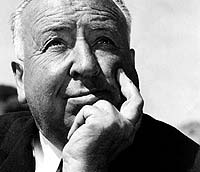
Alfred Hitchcock is the acknowledged master of the thriller genre he basically invented. He was an English film director and producer. Between 1940-1960 he was nominated for best director 5 times, he never won an Academy Award. In 1919 he began his film making business by illustrating title cards for Paramount Famous Players-Lasky studio in London. Whilst working here, he learned editing, art direction and scripting, and in 1992, he rose to assistant director.His shots were framed in order to maximize anxiety, fear or empathy. Later that year, he directed an unfinished film, No.13 or Mrs. Peabody. Hitchcock/s first completed film as a director was The Pleasure Garden (1925), an Anglo- German production filmed in Munich.
His breakthrough film was The Lodger (1926), was a typical example of the class Hitchcock plot: an innocent protagonist is falsely accused of a crime and becomes involved in a web of intrigue.
His creation of "subjective sound" is an early example of Hitchcock's technical virtuosity, in Blackmail(1929), which was his first film including sound. In "Blackmail" and in his 1930s film "Murder!", he first made the connection between sex and violence. He directed more than 50 feature films during his career which lasted over 6 decades.
Often regarded as the greatest British film maker, he came first in a 2007 poll of film critics in Britain's Daily Telegraph, which said: "Unquestionably the greatest film maker to emerge from these islands, Hitchcock did more than any director to shape modern cinema, which would be utterly different without him. His flair was for narrative, cruelly withholding crucial information (form his characters and from us) and engaging the emotions of the audience like no one else. (Source: http://en.wikipedia.org/wiki/Alfred_Hitchcock)
The following image contains a complete list of Hitchcock's films:

Sources:
Monday, 1 December 2014
A Brief History of Thriller Films.
In order to gain knowledge on how to produce our thriller film, I did some research on the history of thriller films, seeing how they've developed over the years.
Media Timeline:

Source: http://www.disabilityplanet.co.uk/critical-analysis.html
One of the earliest thriller films was 'Safety Last' by Harold Lloyd, which was made in 1923.
The making of thriller films began to increase from here:
Media Timeline:
Source: http://www.disabilityplanet.co.uk/critical-analysis.html
One of the earliest thriller films was 'Safety Last' by Harold Lloyd, which was made in 1923.
The making of thriller films began to increase from here:
- The Bat Whispers (1930)
- Dr. Jekyll and Mr Hyde (1931)
- M (1931)
- Murders in the Zoo (1933)
- Gaslight (1944)
- Laura (1944)
- The Picture of Dorian Gray (1945)
Lighting Practice.
We did a lighting practice to
gain understanding of how to use light to get different effects. We went in the
music practice room, which was incredibly dark, and used artificial light from
the torches on our phones, to get different effects. We also used natural light
from the corridor to get different effects.
 |
|
We also used the torch from our phone with this image. We positioned the torch below Carmel's face, and also one behind her head to get the background lighting. |
 |
| We used our torch from our phone to make this shot. We positioned it slightly higher than Carmel's head and to the left of her face. |
 |
|
We positioned Carmel up to
the door, with only the natural lighting from the corridor shining on.
This shot helped show the different features of Carmel's face. |
 |
| We also positioned Carmel up to the door with natural light on this one, however we didn't hold the camera as close with this image. The light is emphasised on her forehead and right side of her face. |
Subscribe to:
Posts (Atom)